| |
| Wednesday, 11 November 2026 |
| DEATH BY WALLPAPER |
| LYNNE GIBSON |
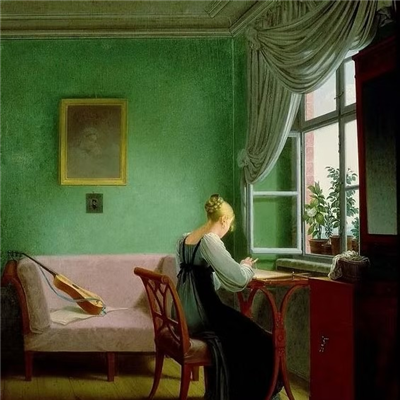 |
Was Napoleon killed by his green wallpaper? This story begins in 1775, with a German chemist and his experiments with arsenic. The resulting powerful green reached its height of popularity when worn by "Queen of Fashion", Empress Eugénie. It was printed on wallpaper by Morris & Co. and was a favourite of plein-air artists, such as Monet, Cézanne and Vincent van Gogh, keen to capture the freshness of nature. But a century later, it was rebranded as rat-poison. In 1856 a chemistry student took home a school project to make synthetic quinine. He failed his home-work, but accidentally invented a vibrant purple dye. Queen Victoria and Empress Eugénie wore dresses in the season's must-have shade. Punch dubbed the craze: "the mauve measles"! Scheele's Green and Perkins' Mauveine were forerunners of hundreds of synthetic dyes and pigments. You will hear fascinating stories - of serendipitous discoveries, industrial enterprise, and some very sinister secrets. An intriguing and witty investigation into the history - and dark side - of wallpaper. Lynne addresses toxic pigments, safety regulations, and the cultural fascination with decorative design. Lynne Gibson is an applied arts specialist with a focus on historical design, materials safety, and decorative culture. Her narrative combines practical insight with delightful depth. |
|
| Wednesday, 09 December 2026 |
| HOW TO READ THE ENGLISH COUNTRY CHURCH |
| Nicholas Henderson |
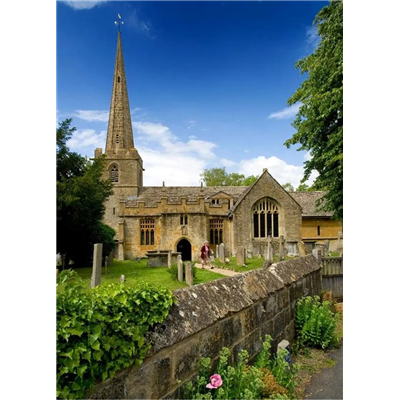 |
It is possible to ‘read’ the passage of time, movements, cultures and peoples in the architecture and art forms evident in many of our English country churches. We will look at overarching eras from the pre-Christian era, through the arrival of the Romans, the Anglo-Saxons, the Normans and onwards to the 16th century and the epoch changing Tudors. Beyond the Tudors we move into the establishment of a new Protestant England. Later the profoundly destructive changes of the 17thcentury Commonwealth era are followed by restoration and liturgical change. The largely forgotten Georgian period of church architecture is examined as church architecture that the Victorians forgot. In turn the great period of church building and gothic revival of the Victorians and the associated innovations of the Oxford and Cambridge movements are examined in detail. Finally, there is a brief look at contemporary changes that have influenced and altered church buildings as the English country church continues to reflect the passing of the ages. A graduate of Selwyn College, Cambridge, Nicholas trained for the Anglican ministry at Ripon Hall, Oxford. Inspired by a period working on the staff of Coventry Cathedral he has gained a wide experience of international matters. He was formerly Bishop-elect for the Diocese of Lake Malawi in Central Africa (2005-2009) and undertook his doctorate on Lay Anglican Ecclesiology – a study in five countries, with the University of Wales. Nicholas has a particular interest in the period of the English Reformation and the associated cultural, architectural and social changes it has produced. He lectures regularly and assists as a priest in London. |
|
| Wednesday, 13 January 2027 |
| BEHIND THE SCENES - CURATING THE MUSEUM |
| Anna Bianco |
 |
ALL OUR LECTURES START AT 11 AM AND LAST APPROXIMATELY 1 HOUR 13.01.2027 – Anna Bianco Lecture Synopsis
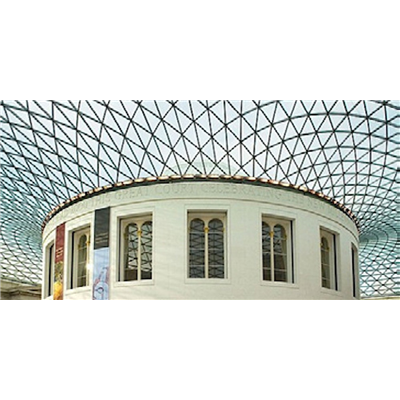
How long does it take to create a major exhibition—and who decides what is shown? This lecture offers a fascinating behind-the-scenes look at the complex process of curating a ‘blockbuster’ exhibition. From the first spark of an idea to the excitement of opening night, Anna Bianco explores the many stages involved: selecting themes, securing loans, negotiating with institutions, and shaping the final display. Drawing on her experiences at leading organisations such as the Wallace Collection and the British Museum, she shares the challenges, unexpected hurdles and occasional drama that arise along the way. The lecture also highlights the key differences between curating temporary exhibitions and permanent displays, offering insight into the creative and practical decisions that bring great exhibitions to life. Lecturer
Anna Bianco is a freelance curator, writer, lecturer and art historian. She has been an accredited lecturer of The Arts Society for 14 years and holds degrees from the Courtauld Institute of Art. Anna has curated exhibitions at major institutions including the Wallace Collection and the British Museum, and has held roles such as Director of the Tryon St. Gallery and Senior Curator at Auckland Castle. She is an experienced lecturer and guide, with a particular passion for bringing artworks to life through storytelling. |
|
| Wednesday, 10 February 2027 |
| THE GOLDEN AGE OF ILLUSTRATION |
| DR EMMA WATTS |
 |
ALL LECTURES START AT 11 AM AND LAST APPROXIMATLEY 1 HOUR THE GOLDEN AGE OF ILLUSTRATION Lecture Synopsis
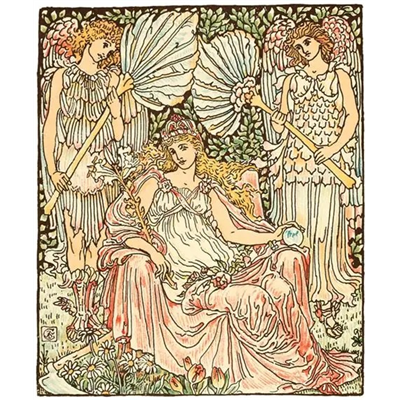
The Golden Age of Illustration was a remarkably creative period lasting little more than 30 years. Fuelled by rising literacy and rapid advances in printing technology, publishers were suddenly able to produce richly coloured and beautifully illustrated books on an unprecedented scale. During the Victorian era and into the early 20th century, illustration flourished both artistically and commercially, with many well-known artists beginning their careers in children’s books and literary magazines. This lecture explores how illustrations brought fairy tales, myths and classic literature vividly to life, often through imaginative, intricate and sometimes eerie imagery. It also considers why this period proved so influential, transforming books into treasured objects and leaving a lasting legacy on visual culture. Lecturer
Dr Emma Watts is an art historian specialising in the economics of art, British art and material culture. After beginning her career in the fine art auction world, she moved into academia, working in the UK, Australia and Hong Kong. She is now a consultant with Watson Strand fine art valuers, as well as a lecturer and writer, with a strong interest in widening access to the arts and education. |
|
| Wednesday, 10 March 2027 |
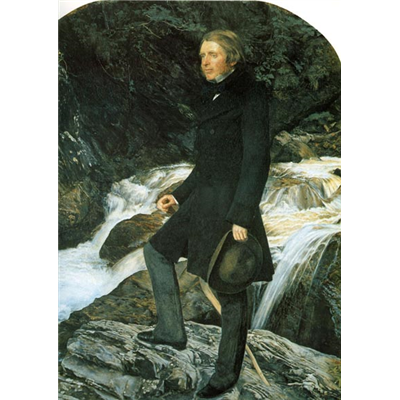
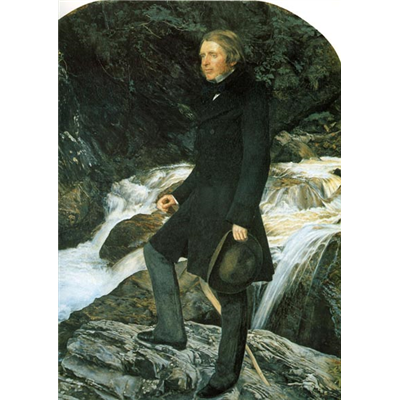
| FROM VENICE TO SHEFFIELD: JOHN RUSKIN'S PASSION FOR ART, CRAFT AND SOCIAL JUSTICE |
| SIMON SELIGMAN |
 |
ALL OUR LECTURES START AT 11 AM AND LAST APPROXIMATELY 1 HOUR Lecture Synopsis
This lecture explores the extraordinary life and far-reaching influence of the great Victorian thinker John Ruskin. A writer, artist, teacher, collector and critic, Ruskin was one of the 19th century’s most remarkable polymaths, whose ideas continue to resonate today. Best known as a champion of J. M. W. Turner and for his deep admiration of Venice, Ruskin’s influence extended well beyond art criticism. His thinking helped shape major cultural and social movements, including the Arts and Crafts Movement, and played a part in inspiring organisations such as the National Trust and the Society for the Protection of Ancient Buildings. Through his writings and collections, he left a rich and complex legacy that continues to inspire discussion and debate. Lecturer
Simon Seligman studied art and architectural history at the University of Warwick, including a formative period in Venice. He spent 19 years working at Chatsworth House, rising to Head of Communications, and has lectured widely in the UK and the United States. He now combines lecturing with work as a life coach and with Guild of St George. He lives in Derbyshire’s Peak District. |
|
| Wednesday, 14 April 2027 |
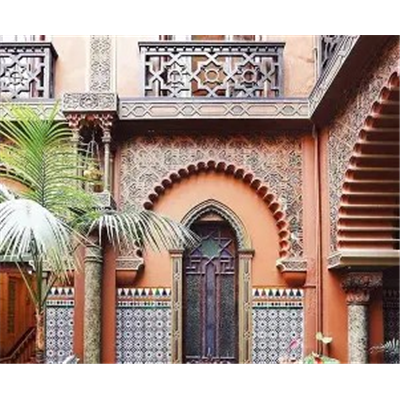
| MOORISH ARCHITECTURE: THE LEGACY OF A VANISHED KINGDOM |
| IAN COCKBURN |
 |
ALL OUR LECTURES START AT 11 AM AND LAST APPROXIMATLEY 1 HOUR Lecture Synopsis
This lecture offers a rich introduction to the remarkable architecture of Moorish Spain, focusing on some of its most celebrated monuments, including the Alhambra, the Great Mosque of Córdoba and the Alcázar of Seville. While these iconic sites stand as powerful examples of Islamic artistic achievement in Iberia, the lecture also draws attention to lesser-known buildings that reveal the breadth and sophistication of this architectural tradition. Exploring both structure and decoration, Ian Cockburn examines the classical influences that helped shape Moorish design, alongside the distinctive decorative styles—intricate surface patterns, geometric forms and richly ornamented interiors—that give these buildings their enduring beauty and exotic appeal. The lecture also considers the fascinating cultural exchange that occurred during the Christian reconquest, when elements of Islamic design were adopted and adapted, resulting in a unique and lasting artistic legacy. Lecturer
Ian Cockburn is an art historian specialising in the period of Islamic rule and Christian reconquest in medieval Iberia. He holds degrees from Birkbeck College and the Courtauld Institute of Art, and lectures widely for The Arts Society in the UK and Spain. He has also given talks at institutions including the V&A, SOAS and Christie’s Education. |
|
| Wednesday, 12 May 2027 |
| THE BED IN ART: FROM TITIAN TO EMIN |
| MARIE-ANNE MANCIO |
 |
ALL OUR LECTURES START AT 11 AM AND LAST APPROXIMATLEY 1 HOUR Lecture Synopsis
The bed has long been a powerful and provocative motif in art, serving as the setting for scenes of intimacy, vulnerability and drama. This lecture traces its depiction from the sensuous mythologies of Titian to the bold modernity of Olympia by Édouard Manet, and the expressive nudes of Pablo Picasso. It also considers the raw and personal impact of My Bed by Tracey Emin. Yet the bed is not only a symbol of passion and desire; it is equally associated with illness, mortality and loss. Through works by artists such as Caravaggio, Edvard Munch and Gustav Klimt, the lecture explores how this familiar object becomes a powerful stage for the most profound moments of human experience. |
|
| Wednesday, 08 September 2027 |
| PASSIONATE POTTERS -FROM DE MORGAN TO LEACH |
| Julian Richards |
 |
ALL OUR LECTURES START AT 11 AM AND LAST APPROXIMATELY 1 HOUR William Morris led a revolution against the products of the machine age. The first of our ‘passionate potters’, William de Morgan, was a friend of Morris who rediscovered the secrets of Near Eastern lustre glazes. In contrast, the eccentric and argumentative Martin Brothers created a range of elaborate salt glazed pots unparalleled in their imaginative breadth. Sir Edmund Elton, the ‘potter baronet’, made pots which combine startling glazes with exotic forms. And finally, Bernard Leach, the father of English studio pottery, not only married the arts of Japan and England but created a legacy that is still alive today. Julian Richards studied archaeology at Reading University and has since worked as a professional archaeologist, in commercial archaeology, for English Heritage, for the BBC and as an independent. He was elected a fellow of the Society of Antiquaries of London in 1992 and is being awarded an honorary doctorate. Julian has been involved in teaching and outreach projects, lecturing widely in continuing education, to groups and societies and to special interest tour companies. A career in broadcasting involved researching and presenting Meet the Ancestors and Blood of the Vikings for BBC2, and Mapping the Town for Radio 4. Julian is also the author of a number of English Heritage publications on Stonehenge, including the previous and current guide books to the monument and landscape, and guest curator of Wish You Were Here, an exhibition of his own extensive collection of ‘Stonehengiana’ which is currently on display at the new Stonehenge Visitor Centre. |
|
| Wednesday, 13 October 2027 |
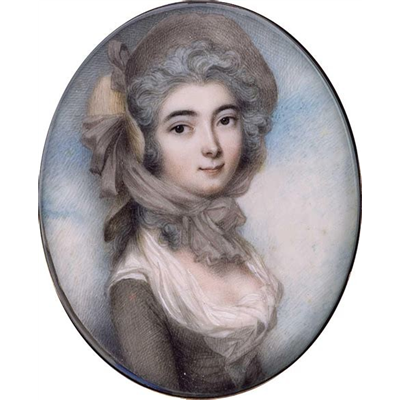
| A MAGICAL MYSTERY TOUR - THE ENGLISH MINIATURE |
| MARK COTTLE |
 |
ALL OUR LECTURES START AT 11 AM AND LAST APPROXIMATELY 1 HOUR Lecture Synopsis
From Hans Holbein the Younger to the arrival of photography, England maintained a remarkable and continuous tradition of miniature portraiture. No other country sustained such a long and flourishing development of this intimate art form. Often worn, carried or exchanged as personal tokens, miniatures were closely bound up with everyday life, capturing likeness, status and sentiment in a uniquely immediate way. As Roy Strong aptly observed, these works offer a “keyhole” into the lives of Tudors, Stuarts, Georgians and Victorians. Through them, we glimpse not only changing fashions and artistic styles, but also shifting ideas of identity, loyalty and memory. This lecture traces the evolution of miniature painting across three centuries, exploring its leading artists, its social purpose, and its enduring appeal—presenting a rich tapestry of English history seen through the eyes of its miniaturists. Biography
Born on the Isles of Scilly and educated at Truro School, the lecturer holds an MA from the University of Birmingham and has spent a career teaching in further and higher education. A lecturer for The Arts Society since 2007, they specialise in medieval and sixteenth-century England, with additional talks on Ernest Shackleton and Winston Churchill. |
|
| Wednesday, 10 November 2027 |
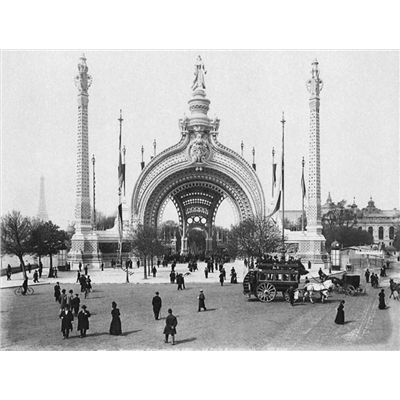
| EXPOSITION INTERNATIONALE 1900 |
| JONATHAN MEYER |
 |
All our lectures start at 11 am and last approximately 1 hour. Lecture Synopsis
The Exposition Universelle 1900 was the last of Europe’s great international exhibitions—a spectacular showcase of culture, innovation and national ambition. Conceived partly in response to Wilhelm II’s plans to demonstrate Germany’s growing power, the Paris exhibition became a defining statement of French confidence at the turn of the century. This lecture explores the background to the exhibition and how Paris was transformed into a vision of fantasy architecture and elaborate national pavilions. With over 60 million visitors passing through its gates, it offered an unparalleled display of art, design and craftsmanship. Particular attention is given to furniture and the decorative arts, highlighting the emergence and influence of Art Nouveau, which came to symbolise the spirit of the age. Biography
Jonathan Meyer graduated from University of Oxford in Theology and has worked with Bonhams, Sotheby's and the Fine Art Auction Group, including leading Sotheby’s 19th-century furniture department in Europe. An international lecturer and published author, he is a Fellow and past chairman of the Royal Institution of Chartered Surveyors Fine Arts and Antiques Faculty, and is also a retired Anglican priest in the Diocese of Salisbur |
|
| Wednesday, 08 December 2027 |
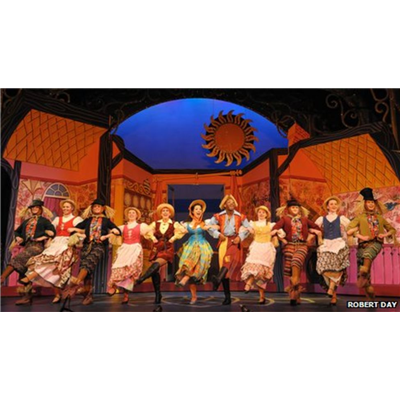
| HERE WE ARE AGAIN! THE GREAT BRITISH PANTOMINE. |
| TONY LIDINGTON |
 |
All our lectures start at 11 am and last approximately 1 hour. Lecture Synopsis
Pantomime is one of Britain’s most distinctive and enduring theatrical traditions. In this lively lecture, Tony Lidington traces its development from the improvised comedy of Commedia dell'arte through its early appearances in Georgian England, to the grand Victorian spectaculars and the influence of music hall and variety theatre. Exploring the origins of familiar elements such as slapstick, stock characters and audience participation, the lecture shows how Britain became the true home of pantomime, shaping it into a unique form of popular entertainment. It also examines why pantomime continues to thrive today—offering insight into its lasting appeal as a joyful and quintessentially British celebration of humour, storytelling and community. Biography
Tony Lidington has worked for over 40 years as a showman, researcher and teacher, specialising in historic popular entertainment. Awarded a doctorate by the University of Exeter, he now lectures there part-time. Known to many as “Uncle Tacko!”, he is the creator of a travelling flea circus and founder of The Pierrotters, Britain’s last professional seaside pierrot troupe, and author of Don’t Forget The Pierrots! (2022) |
|