| |
| Wednesday, 08 October 2025 |
| A BRUSH WITH THE SEASONS
A COMMUNITY ART CLUB |
 |
Bringing Art and Companionship to Our Community This year, The Arts Society Appleby turned its attention to older people and others at risk of isolation in our rural community. With support from Arts Society funding and a local artist, Anna Quicke, we ran a series of free, accessible art workshops designed to encourage creativity, confidence and social connection. Working closely with a local home-care provider, participants were supported by carers and family members, ensuring that people with mobility issues or additional needs could take part fully. The workshops brought together people of different ages and abilities to create a large collaborative artwork inspired by the Eden Valley and its changing seasons. As the weeks progressed, friendships formed, confidence grew and a real sense of community developed around the table — helped along by plenty of conversation, tea and cake. The finished artwork will soon be displayed locally, allowing the wider community to share in what the group has achieved. The project showed how art can reduce isolation, bring people together and enrich lives — a real success for everyone involved. |
|
| Monday, 23 December 2024 |
| BRINGING FESTIVE CREATIVITY TO EDEN CHILDREN |
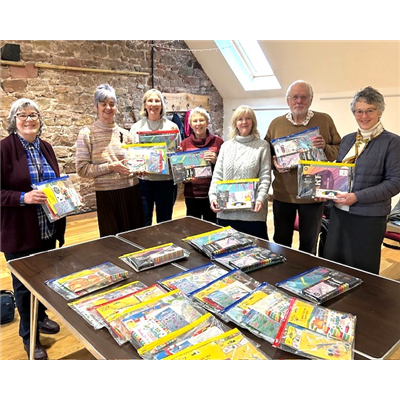 |
In a heartwarming effort to brighten the festive season, The Arts Society Appleby is delivering 55 specially created "art bags" to the Appleby Food Bank on Thursday, December 19th. "This initiative, known as the Eden Art Bags Project, aligns perfectly with the society's motto, 'Bringing art to all.'" While Cumbria is renowned for its stunning landscapes, many families face financial hardship. In the Eden Valley alone, over 70 children rely on food banks, reflecting wider statistics of poverty across the county. Each art bag is filled with age-appropriate materials designed to inspire creativity and nurture young minds. Supplies include coloured pencils, drawing pads, water colours, and art books tailored for pre-school, primary, and secondary school children. For many of these families, accessing such resources would be out of reach, but the project seeks to spark joy and creativity—perhaps even unlocking hidden talents that could shape futures. This venture has been made possible through the combined efforts of The Arts Society Appleby, a £500 grant from the North West Area Arts Society, £150 from Eden Country Care, and generous donations from society members. The bags will be distributed with food packs just in time for Christmas, bringing smiles to children and easing pressures on families. "The project has been a true team effort, with the committee working together to bring the initiative to life. By delivering these art bags, The Arts Society Appleby demonstrates its dedication to fostering creativity and supporting the local community." The Arts Society Appleby invites anyone interested in art and community to join their welcoming group. Events are held at the wheelchair-friendly Market Hall, where visitors can enjoy stimulating lectures and a chance to meet like-minded individuals. By bringing the joy of art to children in need, The Arts Society Appleby is showing how creativity can transform lives—one brushstroke at a time. |
|
| Wednesday, 30 October 2024 |
| INSPIRING YOUNG CREATIVES AT MASK WOOD! |
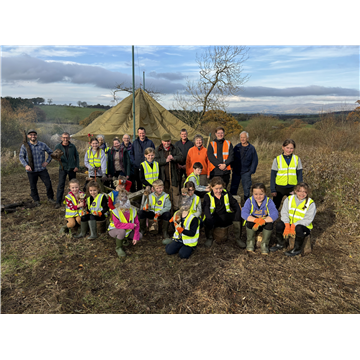 |
We were delighted to sponsor Great Asby School in their forest day on Friday 25th October. Mask Wood is a proposed community woodland near Great Asby. It is being developed by The Asby Tree Group in collaboration with local landowner Rob Braithwaite.
The woodland area is intended to be publicily accessible and will serve as an outdoor classroom for the school and the local community.
The wood became alive as children explored its natural beauty and unleashed their creativity in this incredible outdoor classroom. From looping branches to crafting drop pancakes and toasted marshmallows over the fire, the children turned everyday tasks into little works of art. After lunch, members of The Asby Tree Group and local community joined in to celebrate this space, which will foster both outdoor learning and creative expression. |
|
| Friday, 27 September 2024 |
| THE ARTS SOCIETY APPLEBY IN WESTMORLAND CONQUER VIENNA! |
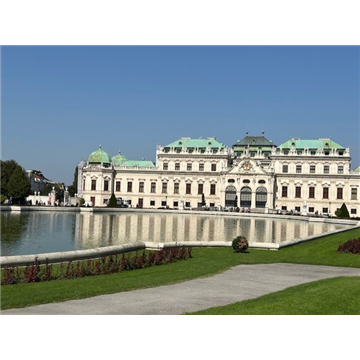 |
On the 14th of September, 25 determined members set off to explore the art, history, and palaces of Vienna. We expected sunshine and blue skies but were greeted by gale-force winds and pouring rain! Despite Vienna being declared an emergency zone shortly after our arrival, our resilient group carried on with smiles and umbrellas in hand. From the majestic Schönbrunn Palace, where we marveled at the Habsburg Empire’s apartments (sadly, the gardens were too stormy to enjoy), to the breathtaking art of Gustav Klimt at the Upper Belvedere Palace, we soaked up Vienna’s rich culture. The true highlight? A magical evening of Strauss and Mozart with a concert filled with waltzes, polkas, and beautiful operatic arias. The weather may have been wild, but so was our enthusiasm for this unforgettable city! |
|
| Saturday, 14 September 2024 |
| THE ARTS SOCIETY APPLEBY IN WESTMORLANDF CONQUER VIENNA! |
 |
On the 14th of September, 25 determined members set off to explore the art, history, and palaces of Vienna. We expected sunshine and blue skies but were greeted by gale-force winds and pouring rain! Despite Vienna being declared an emergency zone shortly after our arrival, our resilient group carried on with smiles and umbrellas in hand. From the majestic Schönbrunn Palace, where we marveled at the Habsburg Empire’s apartments (sadly, the gardens were too stormy to enjoy), to the breathtaking art of Gustav Klimt at the Upper Belvedere Palace, we soaked up Vienna’s rich culture. The true highlight? A magical evening of Strauss and Mozart with a concert filled with waltzes, polkas, and beautiful operatic arias. The weather may have been wild, but so was our enthusiasm for this unforgettable city! |
|
| Friday, 28 June 2024 |
| WE SPONSOR PUPILS INITIATIVE OF GREAT ASBY ENDOWED SCHOOL TO DRESS SAINT HELEN'S WELL IN GREAT ASBY |
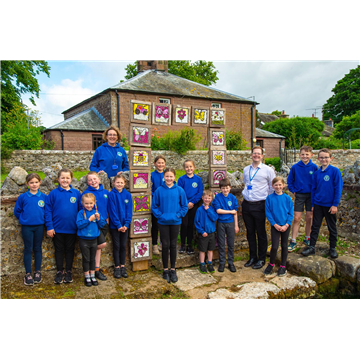 |
We were delighted to sponsor the children of Great Asby Endowed School with their project to dress St Helen's Well in Great Asby. This tradition has roots in ancient pagan rituals and involved creating intricate artwork on wooden frames adorned with natural materials. After a week of preparation the children invited friends and villagers for a blessing led by Reverend Francis and celebratory hymns. The event concluded with a lovely afternoon tea at the school prepared by the children. |
|
| Monday, 17 June 2024 |
| "SEWING SEEDS FOR SUCCESS FOR PUPILS" |
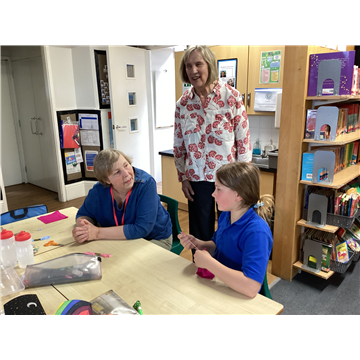 |
Sewing machines have been donated to an Eden primary school in a bid to support students creativity. Over recent years The Arts Society Appleby in Westmorland has been supporting local schools - from an innovative project with Appleby Grammar during Covid which enabled the school to purchjase digital equipment to also funding art workshops for other pupils. The society's most recent support was to fund three sewing machines for the pupils at Asby Endowed School. The sewing machines are currently being used in Design Technology lessons, in which the children are designing and making pencil cases and mobile phone cases. |
|
| Wednesday, 12 June 2024 |
| VISIT TO NEWBY HALL 12TH JUNE 2024 |
 |
And the sun shone brightly!On the 12th June The Arts Society Appleby in Westmorland visited Newby Hall in Yorkshire. Initially our members had a guided tour of the hall which is one of England's renowned Adam Houses and an exceptional example of 18th century decoration. Built in 1690 by Christopher Wren the house was later enlarged and adapted by John Carr and Robert Adam. Later our members explored the award winning gardens whilst some of our more adventurous members tried a trip on the railway others had a more relaxing time sailing down the river. |
|
| Tuesday, 16 February 2021 |
| GFX21 EXHIBITION |
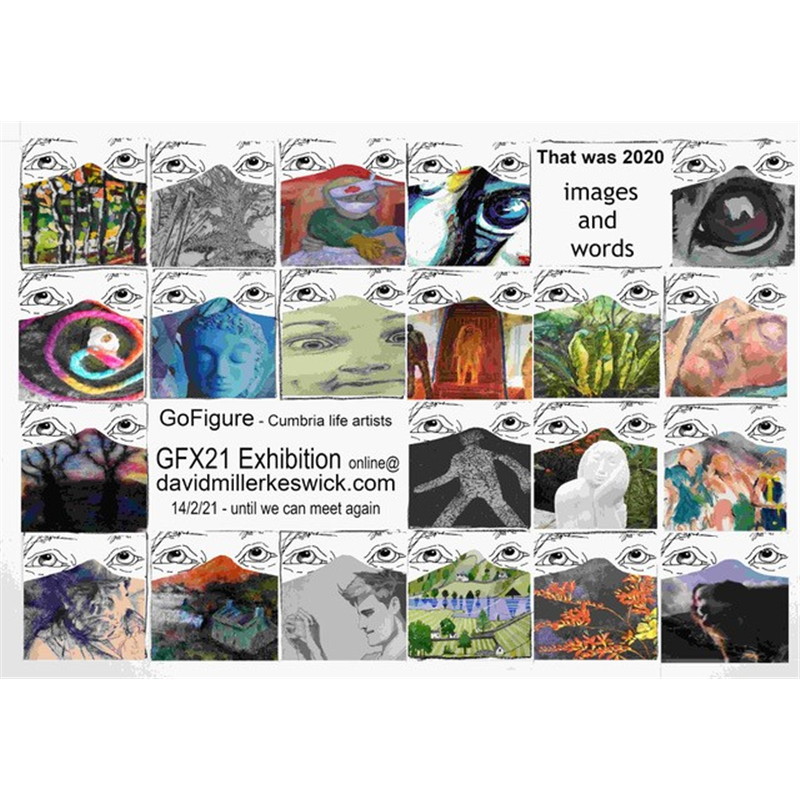 |
GoFigure is an inclusive life drawing group that has met most weeks since 2011. We usually meet in a large village hall just outside the small market town of Keswick in the Lake District National Park, UK. We suspended our indoor sessions on 13th March 2020 but we did manage to squeeze in (2 metres apart) some outdoor sessions with restricted numbers in the summer. We hope to restart in some form in May 2021. We have managed to get along for ten years without a web site or even a formal structure. In normal times our only reason for being is to provide opportunities for figure drawing and painting with a real person as a model. We hope to be able to get back to something like that. But at this time we have been loaned a part of David Miller’s website to stage this exhibition. Each contributor’s page has a story to tell about what they did and experienced in 2020. Sometimes this is explicit and sometime implicit. Due to circumstances beyond their control a couple of the contributors weren’t able to complete their pages fully. You can zoom in or load pictures into separate windows if you want to look at them close-up. The exhibition does not try to mimic a gallery. It is more like a selection box of handmade chocolates (mmm!). So please take your time, sit down with your favourite beverage and enjoy! There is no comment facility on this web site but those contributors who are happy to be contacted have put details on their pages, so please do! |
|
| Tuesday, 01 December 2020 |
| LADY ANNE ANNE SCULPTURE ERECTED IN KIRKBY STEPHEN |
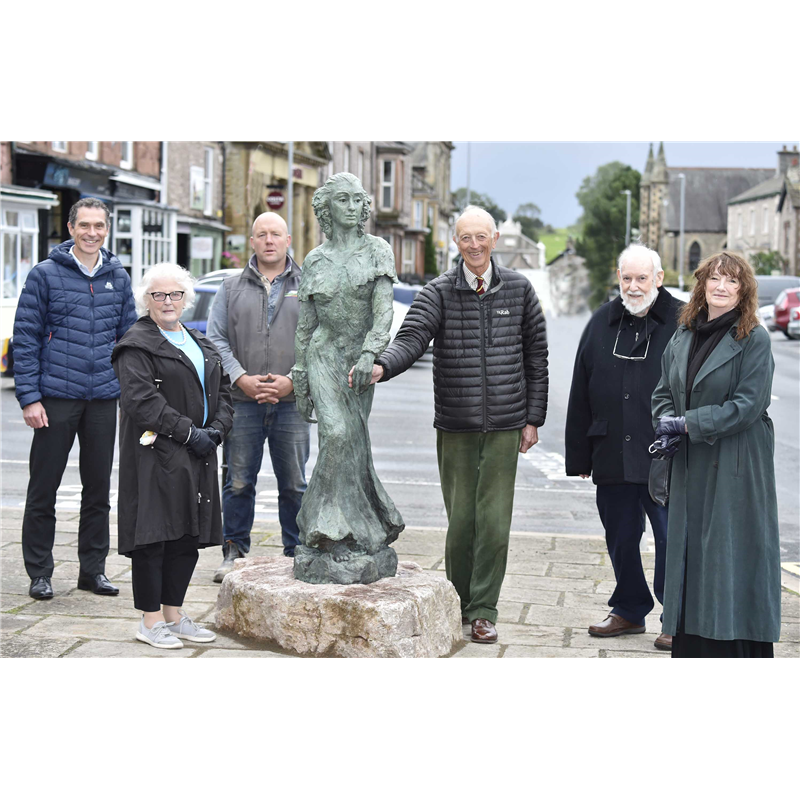 |
In September 2020 a bronze statue of Lady Anne Clifford was installed outside the Tourist Information Centre in Kirkby Stephen in Cumbria. Born in 1590, Lady Anne was the daughter of the Earl of Cumberland and, as a woman, had to fight to claim her natural inheritance. Two marriages made her Countess of Dorset and of Pembroke, but when she was widowed a second time she returned to spend her old age in Westmorland. The 2m high statue was made by Diane Lawrenson, sculptor and member of Appleby-in-Westmorland Arts Society. Diane said: "The sculpture captures the spirit of the indomitable Lady Anne Clifford with her steely determination, walking through old Westmorland." Lady Anne, who lived from 1590 to 1676, was a formidable lady who often walked the 100 miles between her five ancestral castles in Westmorland and Cumberland. After her many years’ absence her castles and other properties were in a ruinous state so she set about rebuilding, visiting and caring for her tenants. There is now a long-distance walk called Lady Anne’s Way, which visits the five castles, starting at Skipton in North Yorkshire, and goes north by Pendragon, Brough, and Appleby, finishing at Brougham near Penrith. Diane’s earlier prize-winning group, the Bronte Sisters of Haworth, was set on the Yorkshire moors that Diane knows so well. Diane has received several awards for her work, including London Art UK Special Sculpture Awards, at the Society of Women Artists exhibitions in the Mall Galleries in London. |
|
| Monday, 23 November 2020 |
| NEW PROJECT WITH APPLEBY GRAMMAR SCHOOL |
 |
We are very excited about our proposed new project with Appleby Grammar School. Following discussions with art teacher Kellina Truch, we are keen for our project to benefit as many children in the school as possible. We have designed a programme that will support and inspire over 200 pupils across differing year groups. The first part of this programme (Digital Development) we have committed to support from our own Society funds. The purchase of three tablets will allow the school to teach digital drawing to GCSE/A level students. Our reserves will also permit them to purchase a good quality camera, enabling students to capture their own images and edit them, particularly valuable for students interested in Graphic Design/Fine Art. The second part of our programme benefits years 8,9,& 10. Due to COVID precautions, many of these students are confined to one classroom all day. To add more variation into their day Kellina proposes they take part in a course of online art sessions run by inspirational artist Alex Jakob-Whitworth. Alex has been successfully teaching online lessons, even including charcoal drawings of a live horse! We believe these sessions will empower and stimulate students giving them motivation to flourish in their art during these restrictive times The third part of our programme is intended for years 7 & 8 (once COVID restrictions allow) and would allow students to attend outside Woodworking Workshops. The group "Woodmatters" specialise in nature activities such as whittling, making charcoal and sculptures. Whilst inspiring the talent in these students they also encourage environmental awarenesss, habitat, ecology and sustainability. We have applied for Grants from our North West Area and also The Arts Society London to help fund these projects. Please watch this space for further developments! |
|
| Saturday, 04 April 2020 |
| VENICE, PARADISE OF CITIES - SATURDAY 4TH APRIL AT 10 AM AT PENRITH PARISH CENTRE ON SATURDAY 4TH APRIL. |
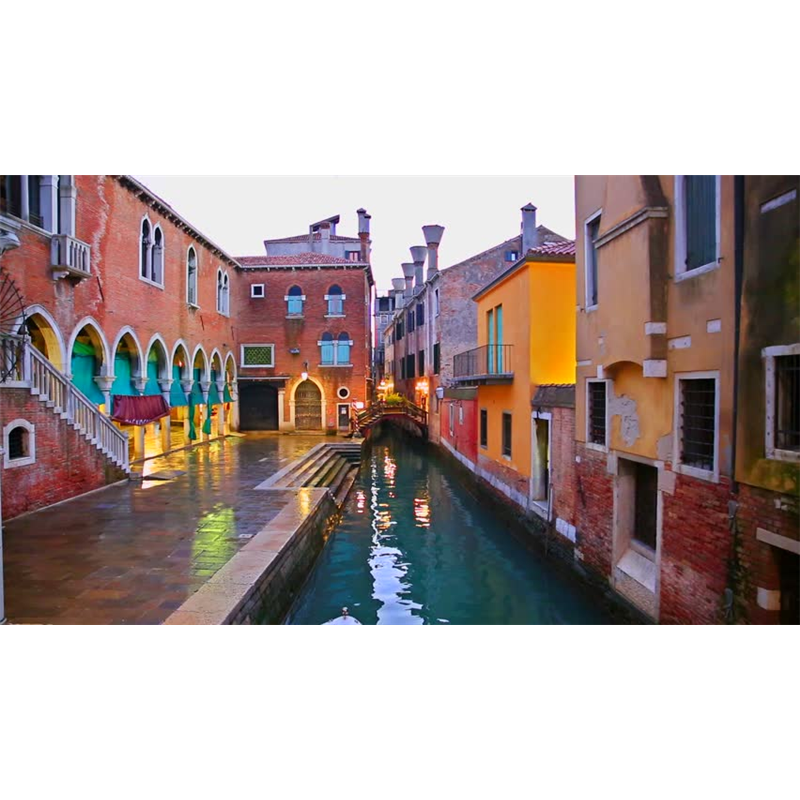 |
Five members of U3A offer a study day on this topic. The cost is £4.00, none members are welcome. The day is split into five sections, history, architecture, music, art and literature. The day starts at 10 am and finishes at 4pm. If you would like more information on this day please follow this link then download the u3a newsletter that has full information on what looks like an inspiring day. If you hope to attend phone or email Joan McMurtry on 01900 822836 or email her on mcmurtry222@btinternet.com
|
|
| Friday, 27 September 2019 |
| Appleby Arts Society Budapest Trip September 27th - October 1st 2019 |
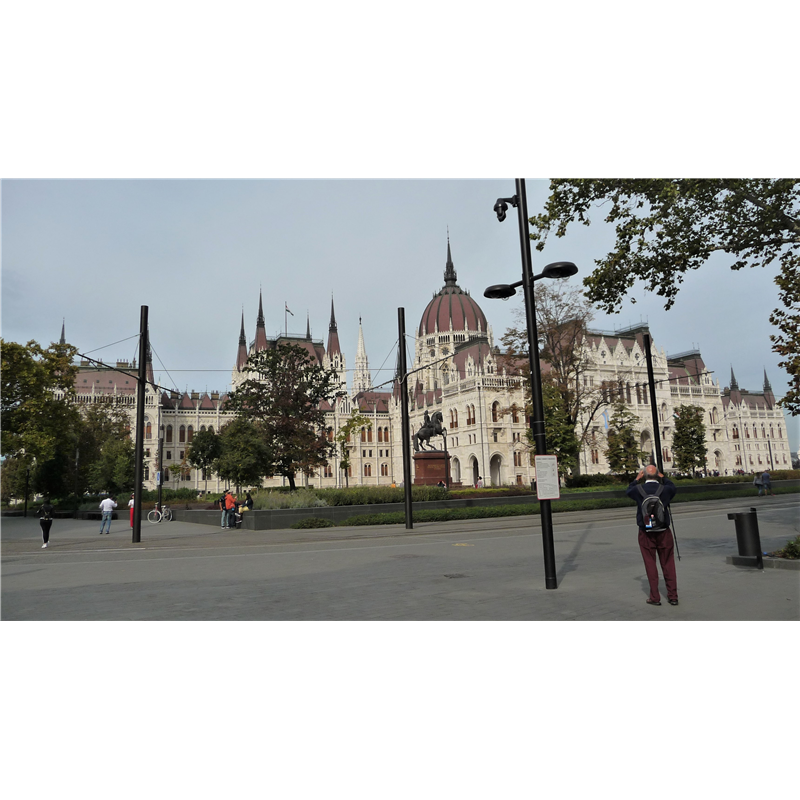 |
This was a terrific trip in all respects. Budapest is a beautiful city and we saw it at its best due to excellent and specialist guides, beautiful weather, great organisation and congenial company. The city tour coincided with the Budapest Marathon which made an interesting backdrop to Heroes Square, St Mathias Church and The Fisherman's Bastion aloft on Castle Hill. The Danube divides Ancient Buda, high on Gellert Hill and flat Pest the "Newtown" whose first building rose when Hungary separated from the Hapsburg Kingdon and became an independent nation in 1866 with its own monarch King Ferenc Jozsef. For the next sixty years Hungary prospered and built the new town in mainly Neo-classical style and then Secessionist (Art Nouveau) style from 1900. There were countless magnifcient examples of both styles everywhere we walked. One of the buildings a bank had ceramic bees climbing up its outside walls to reach honeypots (moneypots of course) at the top and later in the week we went inside the the House of Hungarian Art Nouveau to see more detail. It was most interesting to see that the Parliament building was built as a result of a competition in this period. It bears similarities to our Houses of Parliament - it is new-Gothic, most Puginesque and hugely grand inside and out. It dominates the Pest side of the Danube. The second and third prize winners were also built across the square from the winner, on grandly Neoclassical and the other solidly baroque. Another highlight was a visit to The Franz Lizst Academy which houses a magnificient Concert Hall built in pure Art Nouveau style with rippling mosaics in the entrance and gorgeous stained glass windows everywhere - we were listening raptly to our guide when an orchestra arrived to practise for its evening concert. It was Beethoven and we didn't want to leave.... It was really fascinating to hear about and see some Hungarian paintings. There are no famous names but some lovely examples of Hungary's own Gothic, Renaissance and Impressionist periods. In a second gallerywe saw more well known European painters - Fra Lippo Lippi (Botticelli's teacher) Ghirlandaio (Michaelangelo's teacher) and Durer and El Greco as well. Another day we rode out into the countryside to see a beautiful gem of a place, Szentendre, a tiny town which specializes in sculpture and we rounded off the few days with a trip in our own boat to see the lovely city from the water. Two of the group managed to squeeze in a couple of hours at the Gellert Baths to sample Budapest's spa waters. We are most grateful to our Chairman, Felicity Arrowsmith with Tailored Travel for organising such an inspired few days. Angela Davis |
|
| Wednesday, 10 October 2018 |
| Adobe houses and desert landscapes |
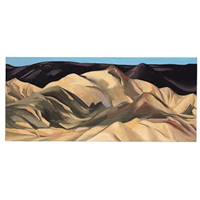 |
Famouse American artist Georgia O'Keeffe was the subject of a lecture given at a meeting of the Arts Society Appleby-in-Westmorland this month. Distinguished artist Lydia Bauman, who is originally from Poland, was the speaker. The talk was entitled "Looking for Georgia - my travels in Northern New Mexico in the Footsteps of Georgia O'Keeffe. Best known for her paintings of enlarged flowers, New York skyscrapers and New Mexico landscapes, O'Keeffe has often been recognised as the "mother of American modernism". Born in 1887 in Wisconsin to a farming family, O'Keeffe went to New Mexico anbd lived there for the rest of her life. In 2016, London's Tate Modern held a commemorative exhibition which inspired Bauman to go to New Mexico. She wanted to paint the same landscapes O'Keeffe had painted - but in her own style. While O'Keeffe's work is smooth and such as sand and pine needles to give texture to her surfaces. It was fascinating for those in attendance at the meeting to see two works of the same landscape, with these individual styles. Bauman went first to Sante Fe, then drove to Taos and Abiquiu, places where O'Keeffe had lived and worked. In Abiquiui known as Georgia O'Keeffe county, she visited the artist's house and studio. From Abiquiui, the house looks over to Mesa Padernal - a mountain O'Keeffe painted 28 times and where her ashes were scattered following her death at Santa Fe in 1986. The excellent lecture was supported by stunning pictures of New Mexico's adobe houses and desert landscapes. |
|
| Thursday, 27 September 2018 |
| UPDATE - GOLDEN YEARS ART PROJECT 2018 |
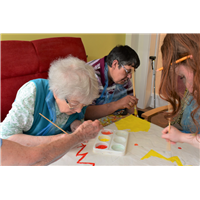 |
When our National Office in London anounced that The Arts Society would be celebrating its Golden Jubilee in 2018 and would like local societies to celebrate it too, in some innovative way, we were a bit uncertain, what if anything, we wanted to do. The North West Area Society were going to produce a book about 50 artistic objects and places to be found in the North West. Initially, we thought "what a great idea" and we would simply join in with them. The Arts Society Cumbria had planneda "young arts exhibition" at the Theatre by the Lake in Keswick. Also, exciting. However, we are a small society with a small membership and we knew our finances would be a limiting factor but allongside this we were always acutely aware of our charity's aim "to bring art to all". In order to fulfil this aim we looked out into our wider community. Our community is made up of residentsliving in the rural Eden Valley many of whom are what's known as the "super aging population" Many people are drawn to retire within our regions beautiful surroundings and are sometimes left to live alone after the death of a spouse or are isolated miles away from family after relocating to a dream environment. Our population demographic means that part of the Eden Valleyhave the second highest average age limit within the UK and it is believed that Age UK rely heavily on the over 60s to run their services. Yes, its great that we are living longer, but lack of public transport coupled with cutbacks in social care have made it increasingly difficult for the less able within our Eden Valley communities to access social and community based events. Older more vulnerable adults are often faced with substantial barriers restricting their inclusion, leading to rural isolation. They may live in lovely surroundings but not see a soul for days. With this in mind we decided to enable older people to overcome some of the barriers that they faced and encourage them to join us to work together in a way that would enable them to express themselves through art, regardless of their experience or ability. The early planning stages included initial talks wtih local home care company Eden Country Care Ltd, who wre eager to help us achieve our aim. Fund raising started with a sponsored hike up "The Nine Standards" a local fell side walk just outside Kirkby Stephen. Arts Society members joined forces with staff from Eden Country Care (and various four legged friends!) to climb this sprawling hill (to a height of 2172 feet) on what was a freezing cold winters day. This initial fund raiser was quickly followed by numerous other events, jumble sales, cake sales, Christmas fetes etc. We also applied for a grant (and was sucessful) to our North West Area. We were delighted to receive encouragement from our Chief Executive Florian Schweizer, who told us he thought our project was "inspiring". Our fund raising complete, we commissioned "Prism Arts" a Cumbrian organisation experienced in delivering art to older people and those living with a learning difficulty to deliver a 10 week art workshop for us. Prism Arts and Eden Country Care confirmed that Mill Gardens would be the venue, a local independent supported living development in Kirkby Stephen. Mill Gardens provided good access for frailer individuals and those arriving in wheelchairs. Its lounge area was large roomy, modern, comfortable and light, ideal for use for our art workshops. Its homely kitchen area proved to be worth its weight in gold for the constant refreshments needed for our artists! Some less confident participants veered towards the kitchen area to help organisers with dishes and refreshments preparation. This interaction helped one participant with serious mental health challenges overcome the anxiety which normally restricted her involvement in activities outside her home. Posters and flyers were designed advertising the workshops and soon we had about 12 volunteers willing to embark on our journey together. Finally the first day of the workshop arrived! (4th May 2018). A few of the participants lived on site so that was handy for them as they just had to walk to the community room. However, the majority lived in a twenty mile radius of the town but Eden Country Care had kindly arranged for their carers to provide door to door transport so gradually that day, people started arriving, some walking, but others in wheelchairs. The majority of the participants were older people, however, we also had two or three younger adults with mental health issues. Finally, everyone arrived including the two lead artists Leah and Katie, staff from Eden Country Care and volunteers from The Art Society, Appleby in Westmorland. Following cups of tea and cakes that first session was all about getting to know one another and relaxing into being able to contribute to the session. We talked about what we would like to do and how it could be achieved. Ideas were passed around the table. Leah the lead artist was a great communicator and soon had people throwing ideas around. Eventually, it was decided that we would like to create some kind of art work that would focus on what changes had been occurring in the last 50 years. Changes with a focus on the lovely Eden Valley where we all lived. We decided to create three banners representing the valley, each focusing on different aspect: political, environmental and the future. To connect the three themes, the river Eden would run through each of the banners. We all worried and lost sleep after that first week: Had the volunteers enjoyed it? Would they turn up again? Did the participants want to come back every week? We were so delighted on the 2nd week when everyone returned! Over the weeks, people started to get to know one another. Our oldest participant was a 96 year old man. Dementia challenges meant that he benefitted from 1 to 1 mentoring to fully contricute and enjoy his artistic experience. A retired local dairy farmer, he initially found it difficult to carry out the sketching and painting stages due to his dementia but it soon became apparent that he was a dab hand at painting between feint guide lines. At one workshop a home carer of his popped in to take himn home and was taken aback by the look of concentration and total absorbtion on his face and amazed at the steadiness and confidence of his paintstrokes. Another lady, with a history of mental health difficulties, never said a word in any of the group discussions, however at the end of the 4th week we were discussing ideas for the following week and hesitantly, speaking quietly, she forwarded a suggestion - it was such a lovely moment for everyone. From then on, she blossomed as talented artist and produced some fine detailed work on all our banners. Another young lady with life changing mental health issues, also gained in confidence and from saying very little at the outset became more positive about her abilities and began to contribute to the group with confidence. Sandy, an Eden Country Care Manager explained that she volunteered to pick up 3 ladies who, without her help could not have attended the Art Club. All 3 lived with cognitevbely and emotionally challenging conditions, dementia, schizophrenia and chronic anxiety. Her first outing with the ladies was challenging as she talked and pointed out local landmarks with very little response but by week 9 the ladies were joining in with conversations, helping her with biscuit and milk shopping on their way to the club, allowing her to see their paintings on walls within their homnes, greeting other members and assisting les mobile participants with walking equipment, seating and refreshments. She said she looked back at the changes she saw in these ladies and felt frustrated for them that they could could not carry on and continue in this brilliant social and artistic adventure. Everyone who came to the workshops all had their own story of course. What was most satisfying was that we enabled these people to come together, share their ideas, enable them to contribute and produce such a wonderful piece of community art. The vision of our society can be described as "The belief that The Arts Society has the potential to enrich people's lives and is at the heart of everything we do, we want to be the most inclusive and influential Art Society". I believe that this project has brought some of the most vulnerable and isolated in our community together and has achieved that vision. Since writing this we have learned that our project has won the coveted "Marsh Award" we pick up our award at the AGM in London on the 15th May!
|
|
| Tuesday, 19 June 2018 |
| FIFTY TREASURES OF THE NORTH WEST |
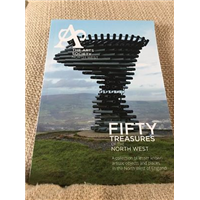 |
2018 will see celebrations marking the Golden Anniversary of The Arts Society. The North West Area of the society has decided to mark this event by creating a book "50 Treasures of the North West". This attractive affordable book is now for sale to members and others for £5.00. The book features interesting and less well known artistic objects and places in the North West of England. If you are interested please contact Felicity: 017683 71182 or email galebars@gmail.com |
|
| Tuesday, 09 January 2018 |
| GOLDEN YEARS ART PROJECT 2017/18 |
 |
The Arts Society Appleby in Westmorland wanted to mark The Arts Society Jubilee Year with a project that was specific to the Eden Valley. Teaming up with Prism Arts we have decided on a project that will reach out to potentially isolated older people living in Eden. Lack of public transport coupled with cut backs in social care inhibits access to services and creates substantial barriers leading to rural isolation. Our aim is to offer approximately twelve older people in our community who have physical or mental disabilities the opportunity to engage in a number of creative workshops. Studies show that creative art pursuits provide older adults with multiple health benefits. Eden Country Care Ltd a local care agency is supporting us with this project and assisting us with funding, transport and assistance within the classes. We anticipate creating approximately 10 creative workshops that will stimulate and engage the participants using a range of art forms including collage, textiles, drawing and intergenerational art (inviting children from local schools to contribute). The workshops will be celebrating 50 years of The Art Society and the resulting art will be showcased at local venues. We have commissioned the experienced “Prism Arts” to assist us and they will supply all the artists and materials and help with publicity. The venue is a local sheltered housing complex. We anticipate the start date to be early April. |
|
| Wednesday, 13 September 2017 |
| Art UK |
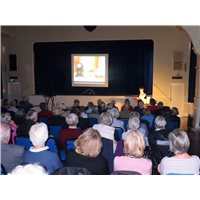 |
Old Masterpiece used to block broken window! 150 members of The Art Society of Appleby enjoyed a fascinating first lecture of the season on the subject of the recently completed on-line project now called Art UK. They learned that the search around the country to find every painting in public ownership uncovered some bizarre results. Paintings catalogued many decades earlier had been long forgotten; left to collect dust; and on one occasion used to keep the coal separate in the coal cellar and in another was being used to block up a draughty window! Art UK’s roots go back to 2002, when the Public Catalogue Foundation, a registered charity, was founded by Fred Hohler. Struck by the lack of available information about artworks in public collections, Dr Hohler was determined to improve the public’s access to the art it owned. The breadth and extent of this search was revealed by the lecturer in Appleby market hall last Wednesday as being quite unprecedented. The lecturer, Mary Rose Rivett-Carnac MA, has been a part of the Art UK project herself since 2007. The search did not just include art galleries and museums but every type of public building such as libraries, police stations, fire stations, council offices, schools, universities etc.etc. Researchers were allocated geographical areas as far afield as the Outer Hebrides and the Channel Islands Once art works were tracked down, permissions were then required from the building’s owners to photograph and catalogue them. The lecturer went on to explain that the difficulties did not end there. Very often insurers would not want the paintings moved and therefore they would need photographing in situ. Imagine attempting this with paintings that may be hanging twenty feet or more from the ground some of which were glazed causing even further difficulties from awkward reflections. The lecturer went on to explain that over 80% of publicly owned art is not actually on display as there is simply not enough wall space available. It is therefore stored in back rooms or cellars. She remarked that many curators were left rather red faced when these were looked into by the researchers as some had been stored in very poor conditions and had suffered damage as a consequence. One art work had had its frame so badly damaged that the picture had been completely removed, folded up into small squares and placed in a drawer! Thankfully following the project it was fully restored. One researcher reported that he was unable to find the artworks in one local council’s head-office and upon enquiring was directed by officials to the council’s cold war nuclear fall-out shelter were they were all found to be in excellent condition. Despite all the obstacles and difficulties the task was completed and in late 2012 the “Your Paintings” website displayed a staggering 212,000 paintings from over 3000 locations across the UK. Following collaboration with the BBC the website was renamed Art UK in 2016. The website is an excellent resource to view paintings anywhere in the country even those not currently on public display. This resource has already enabled one eagle-eyed art dealer to discover an original Van Dyke hidden away in the Bowes Museum store room. The website is very flexible, enabling users to search by artist or by subject or by area and even enables users to contribute. For example there are many artworks where the artist is unknown or where the sitter or subject is unknown and they are hoping that the public can help fill in these gaps in knowledge. Art UK are now going on to find and record the countries 170,000 sculptures! |
|
| Wednesday, 12 April 2017 |
| Report on the lecture "Life and Times of the Sundial" by Kevin Karney MA JP |
 |
Sundial expert and cosmologist Mr Kevin Karney gave Westmorland Decorative and Fine Arts Society members a fascinating and inspiring lecture on telling time throughout the ages at their monthly meeting at Appleby Market Hall on the 12th April. Kevin’s talk described how in ancient times people worked out the time by measuring their shadows and went on to explain how developments in science saw the emergence of sun dials and by the middle ages mechanical clocks began to appear. However, the history of the sun dial outstrips that of the clock by at least 2000 years .Kevin also brought with him an array of intricate models and miniature sun dials for members to examine together with “cut-out sun dial models” for members to take away and make themselves. Using his slides to illustrate Kevin explained that the sun dial is a device that tells the time of day by the position of the sun in the sky. Basic sun dials consist of a flat plate (the dial) and a gnomon which casts a shadow onto the dial. As the sun appears to move across the sky the shadow aligns with different hour lines which are marked on the dial to indicate the time of day. The “style” is the time telling edge of the gnomon which casts a broad shadow and the shadow of the style shows the time. Kevin went on to explain several different types of sun dial and with the use of his slides explained the differences and how they worked. Kevin told the meeting how time has been told down the ages from the perspective of both the sun dial and its competitors. Kevin interspersed the lecture with amusing quotes from philosopher’s and poets through the ages, for instance Benjamin Franklin said “You may delay but time will not” whilst Dr Seuss said “How did it get so late so soon?” Kevin also looked at other aspects of the sun dial, how it had been a marker of religious observance, eg times of masses, or sometimes a “memento mori” ie on a gravestone but also as a sign of exquisite craftsmanship and a sign of elegance. One of the first ways to tell the time was for a person to look at their own shadow cast by the sun. For example in June when their shadow was twice their height it was 4 pm. However, in early history people were not so interested in telling the time as they could just look up at the sky and see whether it was time for lunch. What they were really interested in though was the time of year as that was needed for agricultural and cultural purposes as great feasts were held on the solstice and equinoxes. In ancient Greece ordinary people told the time of year by watching the stars to know when they should plant their crops. As the world developed people became more interested in telling time and working out how long things took. For example if you hired labour you would need to know how long people had worked and various time-pieces were developed for that purpose. One of his slides showed an ancient Egyptian water clock where time was calculated by the regulated flow of liquid through holes. As history progressed knowing the time became more important and sun dials were developed and although generally accurate they could be up to 16 minutes wrong at different times of the year as they are based on solar time as compared to mean time. As accuracy became more important clocks were developed and in about 1750 a significantly accurate chronometer was invented allowing navigators to calculate longitude and thus their global position. Railways were also keen to have a uniform time across the country and in 1880 the British first adopted Greenwich Mean Time as railway time. Time signals were eventually broadcast on radio and became available on the telephone. Bit by bit we moved to the atomic age and now everything is extraordinarily accurate, co-ordinated by the UN international time and is now told by a series of atomic clocks. |
|
| Saturday, 08 April 2017 |
| Trip to Dublin and Belfast April 2017 |
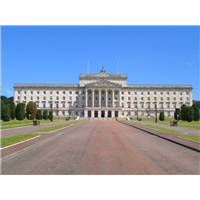 |
Just after 7am on Monday 3rd April, 26 members of the Westmorland Decorative and Fine Arts Society huddled together at bus stops in the Eden Valley awaiting their coach for what was going to be an exciting and inspiring visit to Dublin and Belfast. After boarding the coach we were swiftly transported to Holyhead where we boarded the ferry which was going to take us over the sea to Ireland. The following day we met our guide, a bubbly Irish Colleen, who interspersed her commentary with a number of Irish songs and gave us a whistle-stop tour of the City including the Halfpenny Bridge, the National Museums, St Patrick’s Cathedral, the Guinness Storehouse and picturesque Phoenix Park (one of the World’s largest city parks). Following this we visited the Hugh Lane Dublin City Gallery home to the Francis Bacon studio. Although born in Dublin, Bacon moved to London then travelled to Berlin and Paris. An exhibition of Picasso’s drawings first inspired him to become an artist. Although continuing to travel extensively his base was in London and he died in Madrid in 1992.In 1998 his studio was moved piece by piece by conservators back to Dublin. Another highlight of the day was a trip to Dublin Castle where we visited the magnificent state apartments built as residential quarters for the Viceregal Court. On Wednesday we visited the famous “Book of Kells” housed in the Trinity Library the Book of Kells contains the four Gospels in Latin which were written by Monks in Iona around the year 800. Following a Viking raid in Iona the books were removed to Kells in County Meath. These inspiring books are written on vellum and are lavishly decorated with images of plants, animals and humans. Following this awe inspiring visit we had a pleasant cruise along the River Liffey followed by a guided tour of the National Gallery of Ireland. On Thursday we left Dublin and our first stop was the Russborough Estate. Throughout the tour of the palatial rooms with their fine collection of handcrafted furniture and objects d’art our guide recounted to us Russborough’s colourful history. Having endured two forced occupations, firstly during the Civil War of 1798 and latterly occupied by the IRA during the 1922 civil war it then survived two major fires, in 1964 and 2010 when the west wing was almost destroyed. Russborough was also the victim of four major robberies, most famously led by the IRA supporter Rose Dugdale in 1974 and again in 1986 led by the “Chairman” Cahill. There were two further robberies in 2001 and 2002. Most of the more valuable paintings are now safely stored in the National Gallery of Ireland. Friday was our first day in Belfast and our grand hotel was just a few yards away from the impressive Parliament Buildings at Stormont and our coach drove around it as we admired the architecture and gardens now open to the public. Our young guide, who was passionate about Northern Irish history and culture took us on a city guide pointing out famous buildings such as Belfast City Hall, St Anne’s Cathedral, Crumlin Road Prison and the historic Queen’s University. In addition, we visited the “peace walls” – a series of separation barriers that divide Catholic from Protestant areas. Our guide giving a brief history of Northern Ireland’s troubles explained that they have now thankfully moved on from “terrorism” to “tourism” the peace walls and their colourful murals being one of the most visited places by tourists. On our final day, we headed to the site of the former Harland and Wolff shipyard for a visit to the fascinating and award winning Titanic Belfast Exhibition. We learned the history surrounding construction, fitting and dramatic launch of the Titanic and of course the subsequent disaster. After sailing from Belfast over 1,500 people perished after it hit an iceberg on the 15th April 1912. We also learned about the aftermath and the subsequent investigations into the disaster and the details of the salvaging operations that took place after it was discovered in 1985. Whether it was a good idea to visit the Titanic Exhibition just prior to sailing to Cairnryan I’m not sure but we all arrived safely and voted the trip a huge success! |
|
| Tuesday, 19 April 2016 |
| Westmorland Decorative and Fine Arts Society - Bruges and Paris April 2016 |
 |
With anticipation and excitement 36 members of the Westmorland Decorative and Fine Arts Society (WMDFAS) boarded their coach on a bright sunny day in Cumbria for what was to be an exciting and memorable trip to Bruges and Paris. Our organizer Felicity Arrowsmith had arranged an itenerary bursting with culture and our spirits were high as we sped South East towards Hull. Our first stop was Burton Agnes Hall an Elizabethan stately home that has stayed within the same family for over 400 years. Designed by the architect Robert Smithson who was Master Mason to Queen Elizabeth 1st the hall adheres to the principals of Tudor Renaissance. Our members marvbelled at some of the treasures collected from over 15 generations which included magnificent carvings, French Impressionist Paintings, contemporary furniture, tapestries and other modern artwork. Of course the highlight for me was the quaint cafe whose menu boasted a sumptuous selection of tasty meals! Once fed and watered we left for the short journey to Hull and the overnight sailing to Zeebrugge where we enjoyed dinner on board as we sailed across the North Sea. After disembarking we headed straight for Bruges to visit the Expo Brugge which is in the former hospital of St. John. Set in a beautiful courtyard, the building has immense charm and character and hosts a permanent exhibition of more than 300 original works of art by Pablo Picasso. Our guide an elderley gentleman full of character and flamboyance passionately explained to us how Picasso was arguably regarded as one of the greatest and most influential artists of the 20th century. Guiding us through the gallery he showed us examples of Picasso's art where he had used different theories and techniques and explained to us the "periods" that each work belonged to and how Picasso was known for co-founding the Cubist movement. |
|
| Wednesday, 18 November 2015 |
| Report on Grayson Perry Lecture |
 |
POTS OF COLOUR BY GRAYSON PERRY The stimulating and provoking November lecture (11.11.15) for the Westmorland Decorative and Fine Arts Society was about the controversial artist Grayson Perry and was given by Mr Harry Fletcher BA MA DipFA who came armed with some fascinating slides of Perry’s work. Before the lecture began the society had two minutes silence to mark the end of the 1st World War and remember those who paid the price for our freedom. Mr Fletcher told the society a little about Perry’s unhappy and sometimes violent childhood and how he escaped his situation by creating a fantasy life which involved his teddy called “Alan Measles”. This teddy became a make-believe hero featuring strongly in Perry’s childhood. Alan Measles has now become an iconic figure in Perry’s work featuring in many of his tapestries, ceramics and also the clothes he wears. We learned that from an early age Perry liked to dress in women’s clothes and he realised in his teens he was a transvestite. Escaping his violent home life he moved in with his father’s family when he was fifteen but his stepmother could not accept his cross dressing and he had to return to his mother’s home. Following his art teacher’s advice Perry studied art at the Braintree College of Further Education then studied for a BA in fine art at Portsmouth Polytechnic. The lack of support from his family following his graduation forced Perry to live in squats where he met the pop musician Boy George and milliner Stephen Jones, together they competed to wear the most outrageous outfits. In 1987 Perry met his wife Philippa getting married in 1992 and their daughter Florence was born in the same year. Starting pottery lessons in September 1983 he quickly presented his first exhibition of ceramics in December of that year in London. This exhibition portrayed his developing interest in using designs to make social comments about society. In 2002 the Stedelijk Museum in Amsterdam mounted a solo exhibition of his work which contributed to him winning the Turner prize in 2003. He received the award dressed as a girl in his alter-ego Claire and was quoted as saying “It’s about time a transvestite potter won the Turner Prize”! Mr Fletcher showed the society many examples of Perry’s ceramics and explained how Perry creates seductively beautiful pots conveying challenging themes. One of the pots he discussed was the “Chris Huhne” reassembled vase. Perry made the vase smashed it up, then glued it together painting over the cracks with gold paint. The vase which is covered with repeated images of Chris Huhne represents the unbreakable “white middle-class” Default Man. A more poignant vase of Perryy’s used a demon to portray Alzheimer’s disease that sliced up past images with scissors. Mr Fletcher also discussed Perry’s work with tapestries and in particular the series of six tapestries named “The Variety of Small Differences” which explain the emotional investment we make in the things we choose to live with, eat, make or drive. The tapestries are centred round a character called Tim Rakewell. Perry’s inspiration for these tapestries came from a series of paintings by William Hogarth (1732/33) which told the story of Tom Rakewell who inherited a fortune from his father. Tom frittered the fortune away through drinking, gambling and other such pursuits and ended up in a mad house. Fletcher concluded his lecture by discussing some of Perry’s more recent work including the house designed by Perry in 2015. Known as “Julie’s House” it overlooks the River Stour in Wrabness, Essex and is an artwork in itself and a setting for some of Perry’s works. Grayson describes the house as a shrine to “Julie Cope” an ordinary woman whose life is depicted in art work throughout the house and who he portrays as a latter day earth-mother. It features a delivery driver’s moped that has been transformed into a chandelier suspended above the living room. The Westmorland Decorative and Fine Arts Society meet at Appleby Public Hall on the second Wednesday of each month. We welcome new members or visitors. To find out more about our society visit our website www.wmdfas.org.uk |
|
| Wednesday, 14 October 2015 |
| Report on Wallace Collection Lecture |
 |
CURATOR SUGGESTS REASON FOR CAVALIER LAUGHING A fascinating insight into a magnificent art collection was given to the members of the Westmorland Decorative and Fine Arts Society by Mr Stephen Duffy in a lecture entitled “The Founders and Treasures of the Wallace Collection” at Appleby Market Hall on the 14th October 2015. Mr Duffy has recently retired from the role of senior curator at the Wallace Collection Museum in Hertford House London. The Wallace Collection is an outstanding national museum founded by five generations of one family between 1760 and 1880. The two greatest collectors were the 4th Marquess of Hertford followed by his illegitimate son Sir Richard Wallace. Mr Duffy recounted an absorbing account of the family’s colourful history including how the second Marquis’s wife developed a close friendship with the Prince of Wales causing a great scandal at the time but ultimately enhancing the fortunes of her family. Sir Richard Wallace too was the result of a liaison between his father the fourth Marquess and Mrs Agnes Jackson with whom he’d had a brief affair whilst he was in the 10th Hussar Regiment. Although the Marquess never acknowledged Sir Richard Wallace as his son and left most of his estate to his nephew, Sir Richard did inherit his properties in Paris and London and most significantly his stunning art collections. Mr Duffy with the help of slides, gave an insight into the collection itself and how it reflected the individual tastes and personalities of the families who played a part in its formation. The acquisitions for instance of the first three Marquesses of Hertford are reminiscent of the Regency period while those of the 4th Marquess perfectly express the spirit of the Rococo revival that coincided with the reign of Napoleon 3rd in France. Richard Wallace too was a man of his time as his collection of princely armour and medieval art would have been of little interest to his forbears. The collection houses many famous paintings by artists such as Titian, Rembrandt and Velazquez. One of the most well-known is the “Laughing Cavalier” by Frans Hals. This painting was acquired by the 4th Marquess who outbid (!) Baron James de Rothschild at an auction in 1865. Mr Duffy explained some of the symbolism in the painting, for example many of the emblems in the embroidery, ie bees, arrows, lover’s knots signified the pleasures and pains of love. Although, named the “Laughing Cavalier” on closer inspection Mr Duffy explained that the Cavalier’s expression was more redolent of a smirk, and suggested it might be the sort of arrogant sneer one might see on the face of someone who had just pinched your car parking space! Further revelations revealed that a snuff box that had been in the collection for over a 100 years was originally owned by Voltaire and, unknown to everyone until recently, had a secret compartment revealing miniature portraits of Voltaire and his mistress! The Westmorland Decorative and Fine Arts Society meet on the 2nd Wednesday of every month at Appleby Market Hall. To find out more about our society and future lectures please view our website www.wmdfas.org.uk |
|
| Thursday, 03 September 2015 |
| Face Book Page |
 |
Watch out for the launch of our Face Book page in October ! |
|
| Wednesday, 02 September 2015 |
| Bruge and Paris Trip |
 |
Please note that application forms for the trip to Bruges and Paris in the Spring of 2016 will be available in our "Documents" section here on the evening of 8th Sept - and hard copies will be available at our first lecture of the season on 9th Sept. Felicity will be taking bookings on a first come (with completed application for and a cheque for 20 pounds) first served basis from 0930 hrs on the 9th Sept. |
|
| Tuesday, 11 August 2015 |
| Yves Saint Laurent Exhibition |
 |
A major Exhibition of YSL work is on at the Bowes Museum in Barnard Castle from 11th July to 25th Oct this year. Further details on the Bowes Museum Website. |
|
| Thursday, 23 April 2015 |
| Life and Times of Thomas Chippendale
A Report on Our Lecture |
 |
CHIPPENDALE – THE LONG LEGACY OF A CRAFTSMAN The members of the Westmorland Decorative and Fine Arts Society listened to an inspiring lecture on “The Life and Works of Thomas Chippendale” given by Mr Janusz Karczewski-Slowikowski BEd MSc on the 8th April at Appleby Market Hall. Members learned how Thomas Chippendale, born to humble beginnings in Otley in Yorkshire in 1718 to a joiner and his wife became famous for his ground breaking furniture design in the early 18th century. Although not a lot is known about him during his early years we learned that Chippendale followed his father’s career in 1730 by serving an apprenticeship in York as a joiner. Later, in London in 1748 he married his first wife Catherine Redshaw and five years later he moved to London setting up a workshop in the fashionable centre for furniture making in St Martin’s Lane. Janusz explained to our members how to recognize the different types of designs Chippendale used and how Chippendale often preferred to work with mahogany not only because of its durability but also its beautiful pleasing finish. Chippendale’s business grew rapidly and became a master of his craft. His entrepreneurial spirit responded to the increased demand during this century for fine furniture by publishing his own pattern book which has become an enduring legacy to Chippendale’s gift of adapting existing design styles to the fashion of the mid 18th century. Originally called “The Gentleman and Cabinet Makers Director” this book became commonly known as “The Director”. It contained over 160 engravings of fashionable furniture and designs and due to its instant success was re-issued in 1755 and 1762. The subscribers were mainly aristocrats and other cabinet makers who marvelled at his design inspirations which were mainly mid Georgian, English, Rococo and neo-classical. Chippendale and his first wife had nine children, five boys and four girls, Catherine died in 1772 and he remarried in 1775 and had three further children with his second wife Elizabeth Davies. Chippendale began to advise aristocrats on interior design and soon embarked on large scale commissions from his wealthy clients. In 1771 he was asked to make furniture for Goldsborough Hall, Yorkshire and then worked on several large projects sometimes with the notable neo-classical architect Robert Adam on properties such as Harewood House and Nostell Priory in Yorkshire. During the height of his success he employed up to 40 specialist joiners and artisans at his workshop in London. At this time Chippendale joined forces with two new business partners Thomas Craig and Henry Ferguson and soon his ground breaking designs were not only popular in Great Britain but all over the world. The Westmorland Decorative and Fine Arts Society (WMFDAS) who arranged this lecture have also arranged a trip to Nostell Priory for its members who are now armed with the background knowledge they need to enhance their visit. If you think you might be interested in joining our group then please visit our website at www.wmdfas.org.uk |
|
| Sunday, 05 April 2015 |
| Transylvania Trip with Rutland Dfas |
 |
Dear Felicity Arrowsmith, This spring, a few spaces are available to travel with Rutland DFAS to explore the fortified churches and historic villages of southern Transylvania, nestled in the foothills of the Carpathian Mountains. Transylvanian Saxons arrived in Transylvania during the 12th century. Sandwiched between Latin central Europe and Byzantine-Orthodox south-eastern Europe, a unique culture emerged which has left behind some of the richest and best-preserved mediaeval architecture in eastern Europe. The lush wooded landscape is dotted with Lutheran churches, attractive smallholdings and walled mediaeval villages, their winding narrow streets lined with the colourful houses of the local craftsmen. “We are really looking forward to our forthcoming tour with ACE. Our numbers are still a little low, and so we would like to welcome fellow travellers from other DFAS groups to join us on what is sure to be a wonderful examination of historic Transylvania. It would be a delight to share the experience with other DFAS members, and we hope that societies might circulate this invitation to those who may be interested. Penny Hedley Lewis of Rutland DFAS
For more details, or information on how to make a booking, please contact Gillian Harvey by calling 01223 841055 or email gill@aceculturaltours.co.uk Transylvania for Rutland DFAS With Mark Powell May 5–13, 2015; £1225 Highlights will include two UNESCO World Heritage sites: Sighișoara, one of the best-preserved mediaeval towns in Europe; and Biertan, with its fortified church perched on a hill in the middle of the village. We also explore the region’s diverse later architecture, from outstanding Gothic churches in Cluj-Napoca, to Hungarian Art Nouveau as seen at the remarkable Culture Palace of Târgu Mureș. Sibiu, the largest and wealthiest of Transylvania’s walled citadels, also houses the 18th century Brukenthal Palace. The oldest and finest art gallery in Romania, it is noted for its excellent collection of 16th and 17th century painting. |
|
| Saturday, 28 March 2015 |
| INSPIRED TALK PRELUDE TO AMSTERDAM TRIP ! |
 |
| Rembrandt and the Golden Age of Dutch Painting was the subject of an inspiring lecture given by Mr Gerald Deslandes MA BA to the Westmorand Decorative and Fine Arts Society on the 11th March at Appleby Market Hall. Mr Deslandes, an art historian and previously exhibitions director at several galleries including Cornerhouse, Manchester and Newlyn Art Gallery, spoke to an audience of over 100 members and guests of the society.
Mr Deslandes gave a brief history of Dutch Painting explaining to the group how, during the 17th century the church no longer ruled the art world and it quickly became a flourishing business as the new bourgeois society of merchants and shopkeepers were spending money to brighten up their homes with fresh paintings.
The Dutch artist’s works were influenced by what the merchants demanded such as historical scenes like great sea battles -important to the Dutch being a great seafaring power; portrait painting, where merchants would dress in their finery for the sitting; prosperity and life’s pleasures were also popular such as depictions of expensive vases, fruits or flowers.
Religious scenes were also in demand, illustrating biblical themes famously realised for instance in Rembrandt’s art. Works devoted to domestic piety were also given pride of place on the walls of wealthy Dutch families as were landscapes and city life. Mr Deslandes maintained that Rembrandt was arguably the 17th century’s greatest artist. From humble beginnings Rembrandt had become an accomplished painter working for a wealthy art dealer. He specialised in portraits and during his time there he painted the famous group portrait “The Anatomy Lesson”. Eventually he set up his own studio and with the help of his wealthy wife became very successful. However, following the death of his wife he began to lose popularity and eventually became bankrupt!
Mr Deslandes also detailed the lives of many other Dutch painters of this age and their incredible techniques, such as Vermeer famous for “The Girl with the Pearl earring” and numerous other painters famous for their superbly realistic landscapes.
A number of the Westmorland group are very excited to follow this talk up with a visit to Amsterdam this week . They will be able to view many Dutch Masters in person on their visits to the famous Rijkmuseum and Van Gogh Museum as part of their three day tour. New members always welcome, more info on www.wmdfas.org.uk
|
|